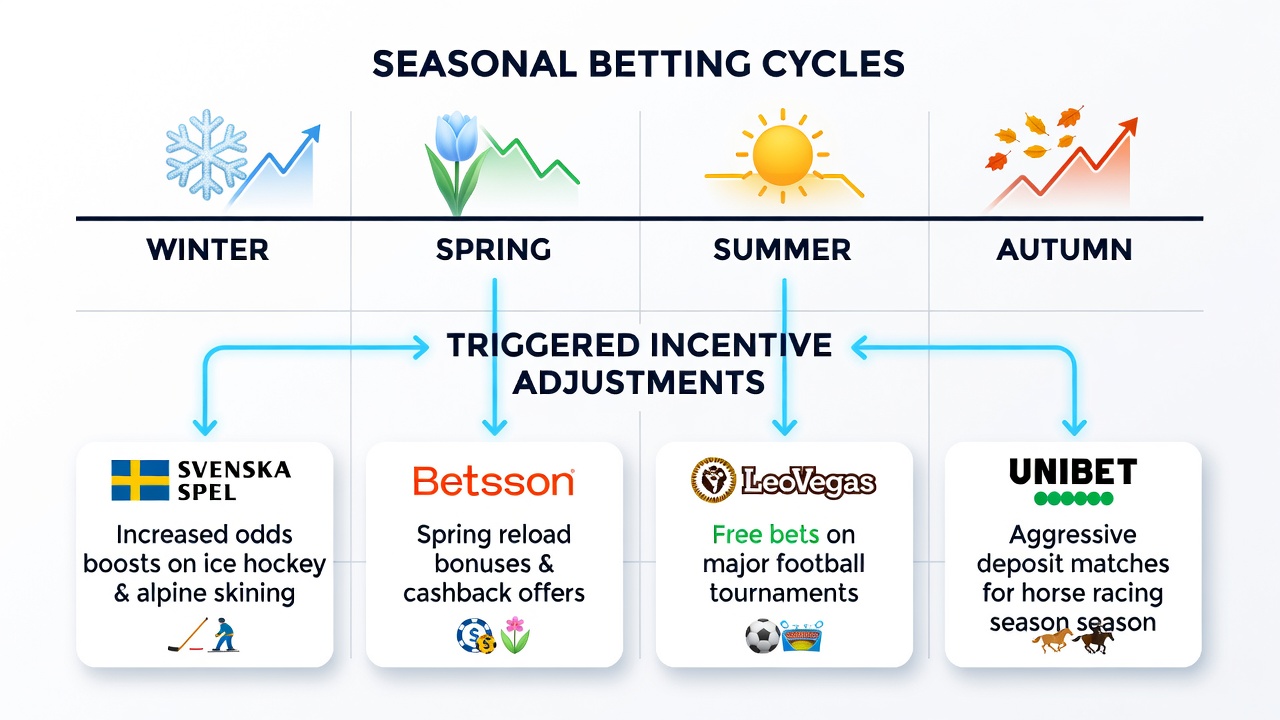
Seasonal Betting Fluctuations and Targeted Incentive Adjustments on Sweden's Licensed Operators
Sweden's licensed betting operators experience clear seasonal swings in activity levels, and these patterns prompt precise recalibrations of promotional structures throughout the calendar year. Data from the Swedish Gambling Authority shows that wagering volumes rise sharply during major football campaigns while they contract in off-peak periods such as late spring and early summer, forcing platforms to refine deposit matches, free bet allocations, and loyalty rewards to maintain engagement without breaching regulatory caps.
Observers note that winter months bring heightened interest in ice hockey and skiing events, whereas summer sees a pivot toward international tournaments and horse racing calendars, each shift carrying distinct implications for how incentives get distributed. Licensed entities track these cycles through internal analytics that combine historical transaction records with real-time market signals, allowing them to scale bonus percentages or eligibility windows in response to expected traffic changes rather than applying static offers year-round.
Tracking Volume Patterns Across the Year
Figures compiled by industry research groups indicate that betting turnover in Sweden peaks between August and December, coinciding with the start of domestic football leagues and the approach of major European competitions, while January through March registers secondary spikes tied to winter sports. These oscillations create measurable pressure on operator margins, since player acquisition costs climb during high-volume windows and retention challenges intensify when overall activity dips. Platforms therefore adjust incentive parameters such as maximum bonus caps, wagering requirements, and time-limited multipliers to align payout exposure with anticipated revenue streams.
Analysts at Nordic gambling consultancies have documented how operators introduce tiered reward schemes ahead of anticipated surges, for example expanding cashback percentages during December when holiday schedules increase participation rates, then tightening those same offers once the new year begins and volumes normalize. Such targeted modifications help maintain compliance with Spelinspektionen guidelines while responding to observable demand curves that repeat annually with only minor deviations.
Regulatory Framework Guiding Adjustments
Sweden's licensing regime requires operators to report promotional changes that affect player terms, and seasonal fluctuations often trigger notifications when bonus structures are altered to reflect new market conditions. The framework emphasizes transparency, so any shift in incentive value or availability must remain consistent with responsible gambling obligations that apply uniformly across all periods. Operators therefore document the data-driven rationale behind each adjustment, linking modifications to verifiable volume forecasts rather than arbitrary decisions.
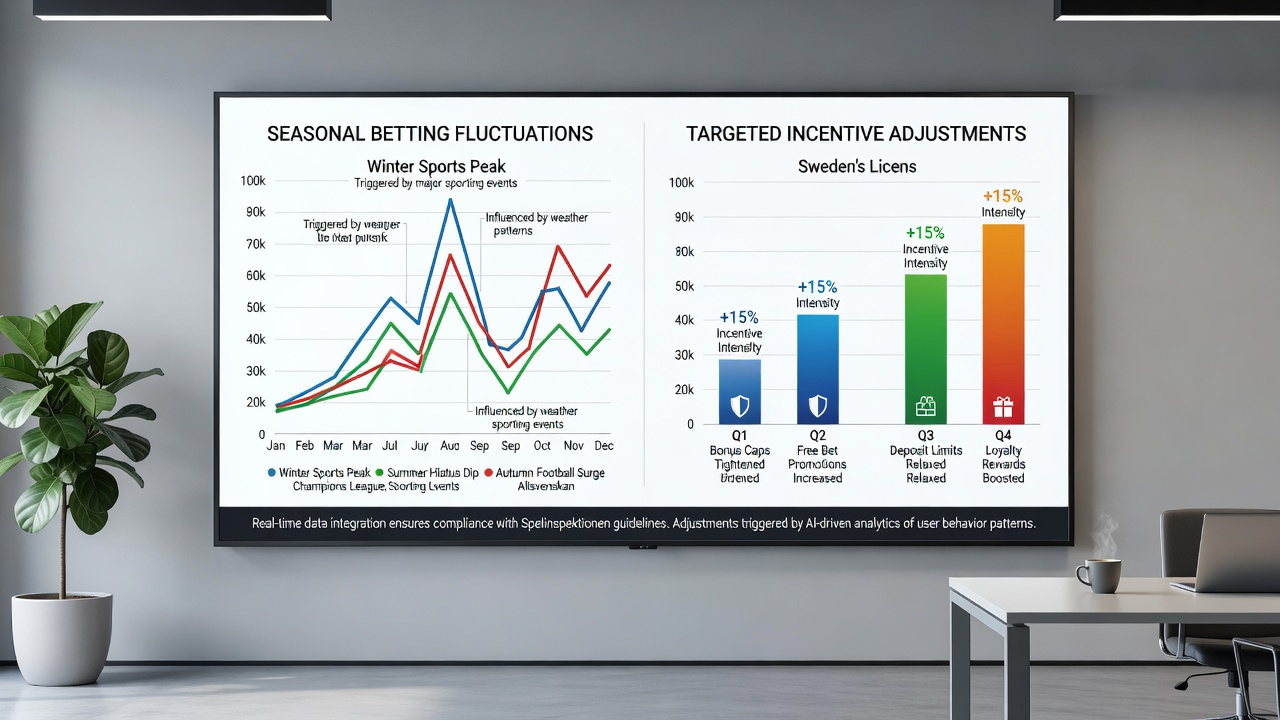
European Commission reports on gambling market dynamics across member states highlight similar adaptation strategies in neighboring jurisdictions, where operators use comparable seasonal data to recalibrate offers without crossing regulatory thresholds. In the Swedish context these practices manifest through narrower eligibility windows during high-traffic months and broader access to loyalty points when activity slows, ensuring that overall incentive spend remains proportional to revenue projections submitted in annual compliance filings.
Operational Mechanisms Behind Targeted Changes
Operators deploy automated systems that monitor daily active users, average stake sizes, and conversion rates from promotional traffic, then feed these metrics into decision models that recommend specific incentive tweaks. When November data signals an early uptick ahead of the 2026 winter sports season, for instance, several platforms have historically extended accumulator bonuses or introduced sport-specific deposit rewards to capture the emerging wave. Conversely, post-summer lulls prompt reductions in free bet quantities and increases in minimum deposit thresholds to control costs during quieter intervals.
Research from academic institutions studying European gambling markets shows that these adjustments typically occur in coordinated batches at the start of each quarter, allowing operators to publish updated terms that reflect both regulatory expectations and commercial realities. The process involves cross-functional teams that combine compliance officers with marketing analysts, ensuring that every modification stays within the bounds set by license conditions while addressing measurable fluctuations in player behavior.
Conclusion
Seasonal betting fluctuations continue to shape incentive strategies at Sweden's licensed operators through data-informed recalibrations that balance commercial objectives with strict regulatory oversight. By aligning promotional parameters with documented volume patterns, platforms maintain operational stability across varying demand periods while meeting transparency requirements that apply consistently throughout the year.